
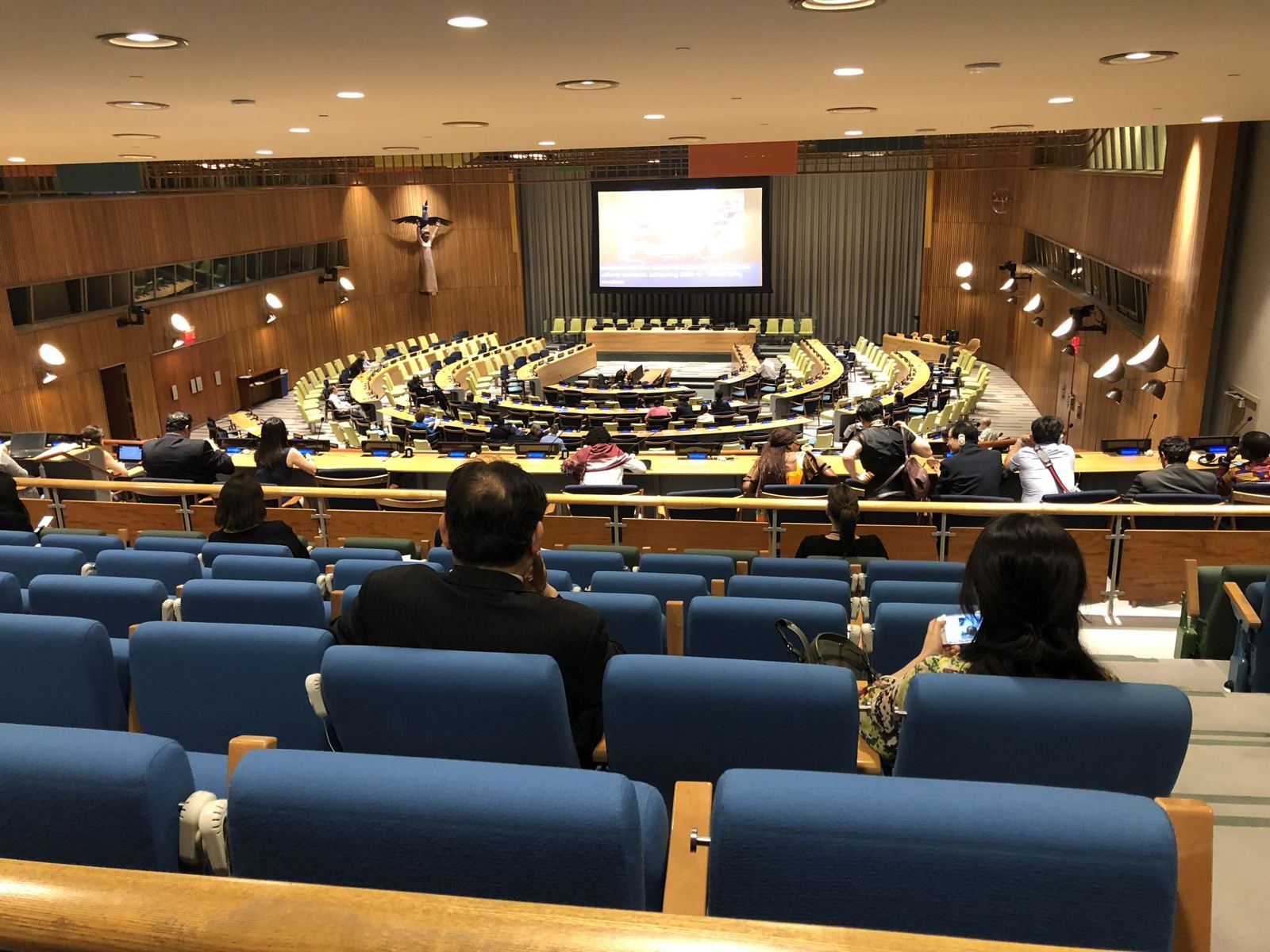
On Monday in New York, at the United Nations Global Higher Education Symposium, I was able to be at the launch of a Consensus Statement on Building Sustainable Futures.
Those of you who know me are aware that I usually have a low tolerance for statements. Statements don’t usually change things. At least not by themselves.
But this is a bit different. Let me explain why.
Multilateralism isn’t dead
The statement brings together a wide range of organisations, and achieves a rare consensus without being meaningless. The UN is facing difficult times, with national actors behaving in increasingly erratic and self-defeating ways. When things are fractured it is vital that we come together and overcome small differences to fight for big change.
The role of higher education as a lever of change
The statement calls for higher education to be recognised as a central societal actor in shaping sustainable, inclusive and democratic futures.
This is critical. Higher education is not a job-creation scheme that keeps people off unemployment benefit for three years. It can change minds and change the planet. This was core to my work in developing the Times Higher Education Impact Rankings in 2019, and continues to be a focus.
The SDGs as a goal of higher education
It calls for the integration of sustainability and the SDGs as a key objective of the sector. Sustainability not as a mission-adjacent option, but as a core part of what it means to be a higher education institution. And it reaffirms that the SDGs should be the core definition of sustainability.
This is something that I hold dear. There are too many competing sustainability frameworks, and while they can have their place they are not a substitute for the breadth and depth of the SDGs.
I applaud QS for building out their Sustainability Ranking, and I love the fact they have incorporated it into their World University Rankings. But I do wonder if it is weakened by creating its own sustainability framework.
Next steps
As I said earlier, statements alone make me suspicious. It is critical that universities adopt the core principles that it outlines, and act on them.
If you are interested in building sustainability more deeply into your university, get in touch. As one of the speakers said:
“Universities actively sharing knowledge across nations could be the greatest approach to sustainable development pathways that we have.”
The signatories: United Nations Academic Impact, UNESCO, the International Association of Universities, the Sustainable Development Solutions Network, the International Science Council, the United Nations Institute for Training and Research (UNITAR), York University’s UNESCO Chair, the Higher Education Sustainability Initiative (HESI) and the German Center for Research and Innovation (DWIH) New York.
First published on LinkedIn.