
Services / Sustainability
Sustainability in rankings and beyond
I designed the methodology behind the THE Impact Rankings, now the Sustainability Impact Ratings, so I know how submissions are read and scored. THE’s Network membership tells you how you scored. We help you decide what to submit, and make the evidence stand up before it is assessed, for THE, QS or both.
Working alongside your Network membership
Since 2025 the ratings have come with THE’s Sustainability Impact Network. Membership gets you into the ratings, gives you up to five submission queries with THE’s data team and, after the results, a metric-by-metric comparison with the global benchmark. That is useful, and we build on it rather than repeat it.
What membership doesn’t do is help you decide what to submit, or improve your evidence before it is assessed. THE are the assessor, so they can’t be your adviser too. That is where we come in: before the window opens, during it, and after the results.
What your membership gives you
- Entry to the ratings, with your data validated by THE.
- Up to five submission queries to THE’s data team.
- Your score on every metric, against the global benchmark.
- Webinars, a newsletter, certification and marketing assets.
Where we come in
- Which SDGs to enter, and which to leave for now.
- Your evidence reviewed before it is assessed, not after.
- Support through the whole window, whenever you need it.
- A plain reading of your results and a plan for next year.
- Advice across THE, QS and UI GreenMetric.
Where universities get stuck
Most universities come to the ratings and rankings with plenty of good work, but not necessarily in a form an assessor can use. Evidence sits in different departments, policies are out of date or hard to find, and the same activity is reported several times over to different audiences.
A few things also catch people out.
- Not every SDG suits every university, because every university has its own mission, its own local context, and a unique set of stakeholders.
- The overall score of the rating is an average across two years, so a weak submission stays with you for a while.
- And the SDG 17 submission underpins your overall position, which makes the sustainability report more important than it first appears.
THE also look for a single piece of evidence for each question, and it has to stand on its own. So choosing the right item matters far more than gathering lots of them.
What we offer
Before the window
Readiness review
Find out which SDGs you can win on before you spend a year on submissions.
A fixed-scope diagnostic for universities entering the Sustainability Impact Ratings or QS Sustainability Rankings for the first time, or expanding their entry. We look at which SDGs to submit, where your evidence is strong or thin, what data you already hold and what a realistic score looks like. For returning members, we start from your metric-level benchmarking, which keeps the review shorter.
You get an SDG-by-SDG gap analysis, a recommended submission portfolio and a briefing for your leadership team.
During the window
Evidence and submission development
Turn good work into evidence that stands up.
The follow-on from the review. We build evidence portfolios, set up internal workflows for collecting data with clear owners, and check that each piece of evidence answers its question on its own. We work alongside THE’s own submission support through the window, from mid-September to mid-November, so help is on hand whenever you need it.
You get an evidence framework, workflow templates, a mock-scored draft and a staff workshop. An evidence check for a single SDG is also available on its own.
After the results
Results debrief
Turn your benchmarking into next year’s plan.
Members receive scores on every metric for each SDG they enter. We read them with you, explain what drove each score, and set out which changes are realistic before the next window opens. It is a short, fixed-price piece of work, best done between June and August.
You get a written debrief, a prioritised improvement plan and a session with your sustainability team.
All year
Strategy and reporting alignment
One set of evidence, many audiences.
Many universities report on sustainability several times over: to rankings, to accreditors, and to their own board and stakeholders. We connect those strands with an SDG-aligned framework and a single evidence base that feeds each external submission, your sustainability report included.
You get a strategy-to-metrics framework, a reporting map, and a design for governance and a board dashboard.
All year
QS Sustainability and other ratings
Put your effort where it counts.
The THE ratings are not the only option. The QS Sustainability Rankings (open only to universities in the main QS rankings) and UI GreenMetric measure quite different things. We help you decide where your effort is best spent, then support the submissions you choose.
You get a comparison of where your university is likely to perform best, and an evidence review for each system you enter.
For systems and funders
System-level capacity building
Raise the whole sector’s game, not one institution at a time.
Masterclass programmes, cohort training and advisory work for ministries, higher education commissions and university associations. It is designed for commissions and funders supporting several institutions at once, including in countries where Network membership is free.
You get a masterclass series across several institutions, national benchmarking reports and policy briefings.
Looking to measure impact more widely, or build a benchmark of your own? See Beyond the rankings.
Through the ratings year
THE’s year now runs to fixed dates, so the best time to start each piece of work is fairly predictable.
January to May
Plan
Readiness review, and strategy and reporting alignment, while there is still time to act on them.
June to August
Results
Ratings are published in June. A results debrief as soon as your benchmarking arrives.
September to November
Submit
The window runs from the third Monday in September to the second Monday in November. Evidence and submission support throughout.
December to February
Validation
THE validate the data. A quiet moment for you, and a good one to start on next year’s evidence.
Why work with us
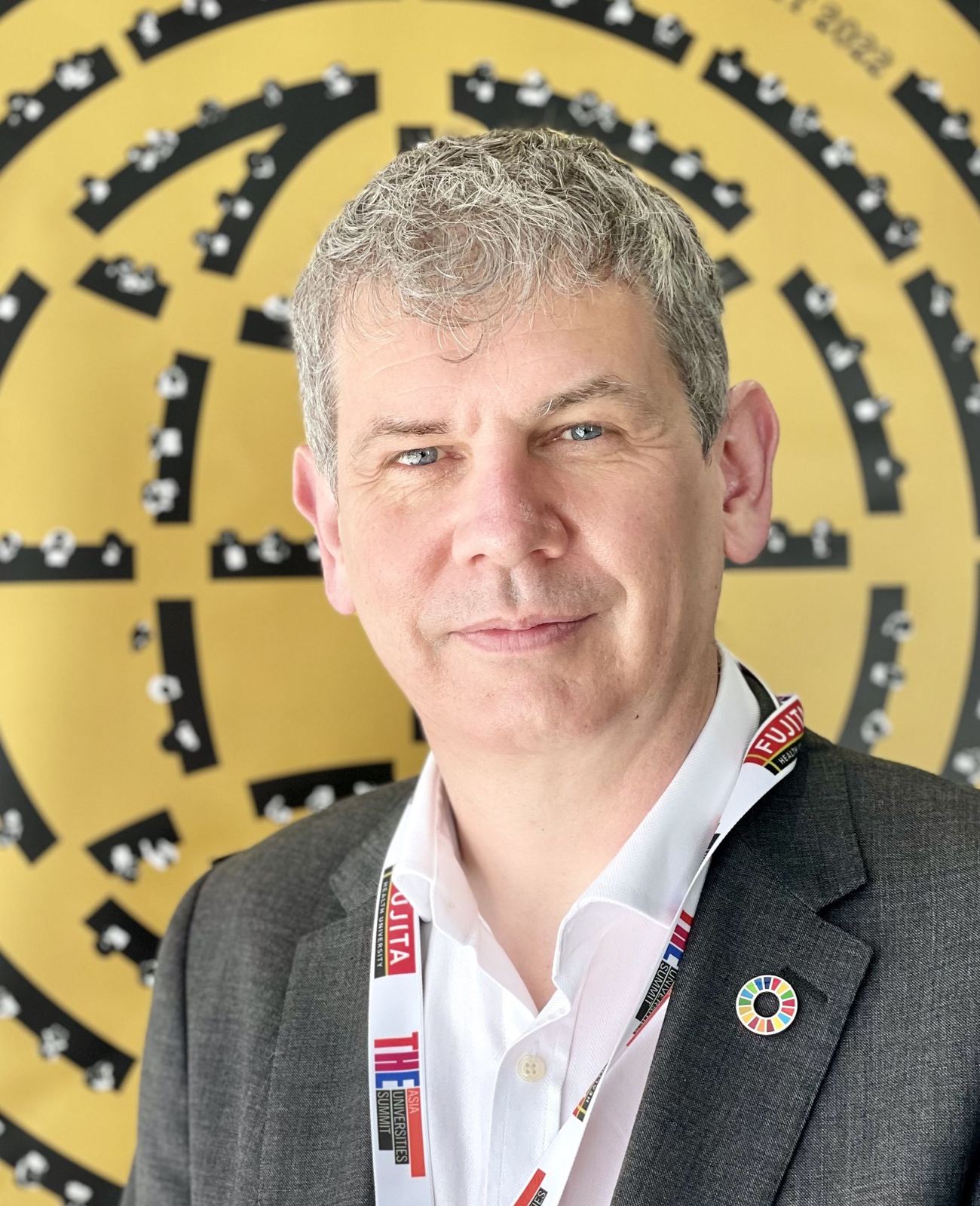
I designed the ratings at Times Higher Education and launched them in 2019, and I have led international efforts to incorporate sustainability in university assessment, including co-chairing the Rankings, Ratings and Assessments Action Group of the UN Higher Education Sustainability Initiative. Our advice is grounded in how methodologies actually work, rather than how they are sometimes rumoured to.
How we work
Every engagement starts with a scoping call. We bill time and materials against a capped budget, so there are no surprises and you only pay for the hours used. Modules can be taken on their own or together.
At the start we agree which parts your own teams will take on, which keeps costs down. Our findings are tied to the methodology in force at the time, and we revisit them if it changes.
Planning your next submission?
Whether you are preparing to enter, partway through the window or working out what your results mean, a short note on where you are now is plenty to start with.